Research Students
I have supervised many PhD students to successful completion. A brief description of the completed projects and current projects are provided below.
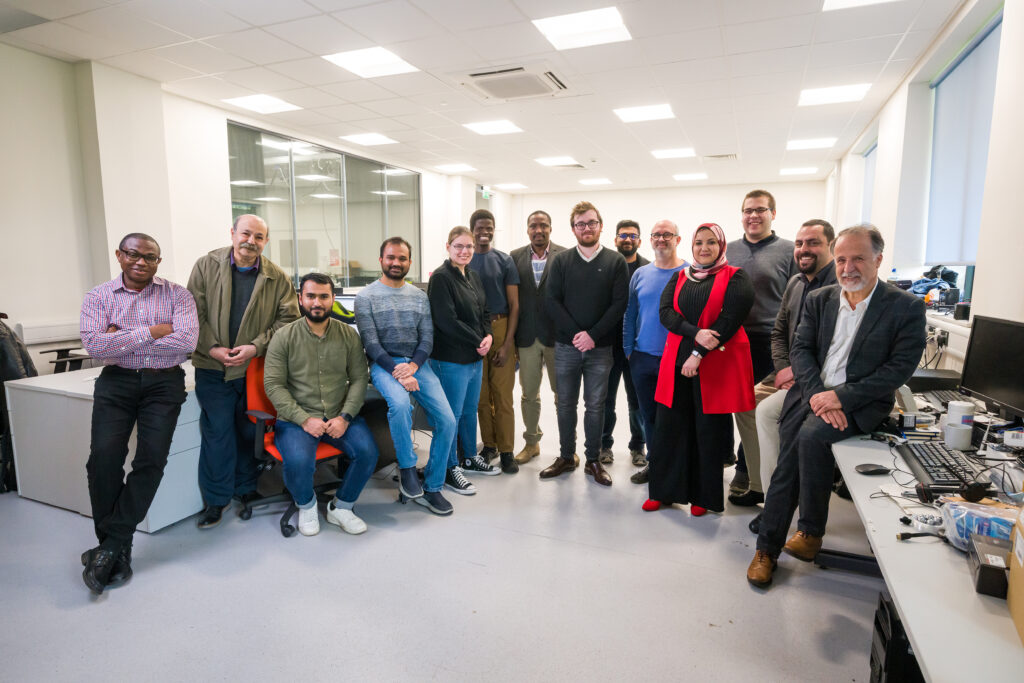
CIA Group @ NTU
Current PhD Students
- +Ravidu Rammuni Silva – Leveraging Artificial Intelligence in Education Systems for Adaptive Learning
- +Amir Alizadeh – Investigation into the applications of quantum computing in smart living environments
- +Feliciano Domingos – Elevating Internet of Things Devices for Underwater Communication Applications Employing Highly-Efficient Artificial Cognitive Devices
- +Kalhan Arachchige – Metric-Semantic Mapping for Outdoor Robotics for Agriculture and Forestry
- +Selwan Abdussalam – Investigating Novel Multimodal Sensory Data for Human Activity Recognition to Support Independent Living for Older Adults
- +Denis Monari – Biodiversity monitoring using a sensors network composed of Internet of Things (IOT) devices

PhD Completed
Dr. Jake Street
PhD Thesis — Title (2026)
Synopsis – ...
[Download]
Dr. Olatorera Williams
PhD Thesis — A study on the application measurement of agile processes, enterprise agility and the emerging technologies. PhD, Nottingham Trent University (2023)
Synopsis – Technological disruptions have created dynamic situations and organisations seek to remain agile, whilst enhancing its strategic and operational capabilities for competitive advantages. This has become inevitable, as the utilisation of Enterprise Agility (EA) as a mediating effect and Big Data Analytics (BDA) for Customer Satisfaction (Cs) due to performance purposes, could help speed up data-driven processes and enhance internal and external organisational capabilities. With the aim of exploiting BDA and Intelligent Automation (IA) as emerging technologies, to improve agile processes and effect a stable technological platform for change management practices, this research thesis further investigates measures to advance service organisational processes for performance optimisation. This process builds upon an Intelligent Automated (IA) platform as it implements vital security awareness based on policies for cybersecurity measures. …
[Download]
Dr. Marcos Fabietti
PhD Thesis — Analysis of Healthcare Big Data using Machine Learning for Disease Monitoring and Management (2023)
Synopsis – Neuronal signals are recordings of the electrical activity of the brain, which allow gaining insight into a diverse range of information. Like other physiological signals, extensive processing and analysis must be carried out in order to extract useful information. In this context, the neuroscience community has developed different open-access tools and pipelines for the different steps involved to facilitate the studies and make more advancements in the field. The aim of the research reported in this thesis is the development of tools and pipelines to facilitate the use of machine learning techniques in chronically recorded invasive signals for early disease detection. This includes the selection of the state-of-the-art for artefact detection and removal, the processing of the signal to feed the models, and lastly a robust machine learning based classifier. The main contributions of this thesis to the application of machine learning in neuronal signal processing include an open-access tool for benchmarking the performance of artefact detection and removal with ML with over 120 articles, the creation of a toolbox with novel methods to detect and remove artefacts from extracellular neuronal signals recorded in the form of local field potentials, a novel channel independent artefact removal method based on the forecasting of normal activity to replace affected segments, an innovative ML pipeline to detect and classify brain states from the processed local field potentials, and lastly finding novel biomarkers from these models and properly assess them against the existing literature.
[Download]
Dr. Bhavesh Pandya
PhD Thesis — A Distributed Architecture for Fuzzy Logic Systems and its Application in Human Activity Recognition (2023)
Synopsis –
Human Activity Recognition (HAR) plays a pivotal role in monitoring the health status of the Persons Under Observation (PUO), especially elderly people. In order to monitor the data related to HAR and physiological data, which are imprecise and uncertain in nature, various previous researchers have developed a good number of machine learning tools. However, such monitoring systems suffer from certain limitations due to the nature and amount of data being analysed. Fuzzy Logic Systems (FLS) are proven to be the best candidate for handling such imprecise and uncertain data due to the inherent advantages of the Fuzzy Inference System (FIS).
Traditionally, fuzzy logic systems are linked to specific hardware or software systems. The literature review reveals that dispersed and distributed architectures of FLS are in high demand due to the potential to handle the complexities of fuzzy logic computations. However, the absence of best practices and standard methodologies prevents widespread adoption. As a result, some specific Ambient Intelligence (AmI) requirements, such as web communications and Service-Oriented Architecture (SOA), which can be found in many modern systems, are rarely adapted for FLSs. Sharing FLSs accessibility as web services (called Fuzzy-as-a-Service alias FaaS), in which the service is developed independently from a specific client platform, allows for autonomy, openness, load balancing, efficient resource allocation and eventually cost-effective, particularly for computationally intense FLSs.
[Download]
Dr. Azizkhon Afzalov
PhD Thesis — Multi-agent algorithms with assignment strategy pursuing multiple moving targets in dynamic environments (2023)
Synopsis – Devising intelligent agents to successfully plan a path to a target is a common problem in artificial intelligence and in recent years, attention has increased to multi-agent pathfinding problems, especially due to the expansion in computer video games and robotics. Pathfinding for agents in real-world applications is a defined problem of multi-agent systems, where pursuing agents collaborate among themselves and autonomously plan their path to the targets.
There are multi-agent algorithms that provide solutions with the shortest path without considering other pursuers and several of those use coordination. However, less attention has been paid to computing an assignment strategy for the pursuers and finding paths that collectively surround the targets. Comparatively fewer studies have been on target algorithms either. Besides, the multi-agent pathfinding problem becomes even more challenging if the goal destinations change over time. Existing solutions consider either a single target with moving capability or multiple targets that are stationary. The work presented in this thesis considers multiple moving targets in multi-agent systems. Therefore, the path planning problem for multiple pursuing agents requires more efficient pathfinding algorithms. In addition, when the target algorithms are improved for advanced behaviour with moving capabilities that smartly evade the pursuers makes the problem even harder.
[Download]
Dr. Abdallah Naser
PhD Thesis — Privacy-preserving human behaviour monitoring through thermal vision (2022)
Synopsis – Despite the abundance of human-centred research to support domestic human behaviour monitoring in various vital applications, there are still notable limitations to deploying such systems on a broader scale. The main challenge is the trade-off between privacy, performance, and cost of assistive technologies to support older adults to live independently in their own homes. For example, the traditional vision-based sensing approach provides excellent performance while violating human privacy in domestic environments. In contrast, the ambient sensing approach, e.g., employing Passive Infra-Red (PIR) sensors, maintains human privacy but suffers significant performance hindrances in realistic scenarios such as multi-occupancy environments.
This research proposes to utilise the Thermal Sensor Array (TSA) to adjust the trade-off between privacy and performance in domestic environment applications. The rationale behind proposing this sensor for human behaviour monitoring applications is its claimed advantages to perform well while maintaining human privacy, low-cost, and noncontact capabilities. Nevertheless, there has not been sufficient related work to empirically validate the hypothesis of using this low-resolution imager in domestic monitoring. Furthermore, most published works that use the TSA have not yet reached the deployment stage due to the TSA sensing constraints. In particular, TSA is sensitive to environmental thermal noise, and its Field of View (FoV) is not wide enough to cover a large inspection area. Intelligent algorithms should be employed in order to avoid these limitations.
[Download]
Dr. Ghayth AlMahadin
PhD Thesis — Objective Measurement of Movement Disorder Symptoms Remotely and Within a Clinic (2021)
Synopsis – Tremor is the most typical common and simply recognised symptom of Parkinson’s disease (PD) and presents in 70% – 90% of PD patients. In addition, tremor severity often indicates PD progress and severity and it can be used to evaluate treatment efficiency. Currently, the severity of Parkinson’s tremor is scored based on the Movement Disorders Society’s Unified Parkinson’s Disease Rating Scale (MDS-UPDRS), however, the MDS-UPDRS is subjective and can be a lengthy process. Advances in wearable technologies combined with Machine Learning (ML) techniques have enabled the development of new approaches for the objective assessment of PD motor symptoms. A limited number of commercial systems are available with limited adoption and implementation due to the apparent lack of clinicians’ and patients’ perspectives. The goal of this research is to develop and validate a comprehensive solution to measure and quantify PD tremor severity objectively that incorporates the analysis of the perspective of the patients and healthcare professionals and provide an appropriate technology based solution. A holistic approach was adopted comprising of qualitative and quantitative methods divided into three stages.
[Download]
Dr. Alanoud Alharbi
PhD Thesis — Behaviour Modelling in Physical Spaces Based on the Latest Advancement in Artificial Intelligence and tagging Technology (2022)
Synopsis – …
Dr. Sherna Salim
PhD Thesis — The development of an intelligent building for improved energy performance and health and well-being (2022)
Synopsis – …
Dr. Salisu Yahya
PhD Thesis — User-centric anomaly detection in activities of daily living (2021)
Synopsis – The current system for providing care to older adults is not sustainable due to its excessive cost. It places an unbearable financial burden on the government and families and pressure on the workforce due to the demand for human carers. Studies have also shown that older adults prefer to be looked after in their homes rather than in a care facility. An automated system of monitoring can provide much-needed support at a lower cost and give peace of mind to relatives.
The focus of the research reported in this thesis is to investigate the concept of abnormality detection in activities of daily living. More precisely, this work is aimed at proposing a dynamic approach for anomaly detection capable of adapting to changes in human behaviour. Abnormalities in daily activities can be an early indication of health decline. Therefore, early detection can inform the families of the need for intervention. Anomalies are often detected by modelling the existing activity data representing the usual behavioural routine of an individual to serve as a baseline model. Subsequent activities deviating from the baseline are then classified as outliers or anomalies. However, existing approaches suffer from a high rate of false prediction due to the static nature and the inability of the approaches to adapt to the changing human behaviour.
[Download]
Dr. Aadel Howedi
PhD Thesis —Entropy measures for anomaly detection (2021)
Synopsis – Human activity recognition methods are used to support older adults to live independently in their own homes by monitoring their Activities of Daily Living (ADL). The gathered data and information representing different activities will be used to identify anomalous activities in comparison with the routine activities. In the related research in this area, the most recent studies have mainly focused on detecting anomalies in a single occupant environment. Although older adults often receive visits from family members or health care workers, representing a multi-occupancy environment. This research is focused on the application of entropy measures for anomaly detection in ADLs in a single-occupancy and multi-occupancy environment. In many applications, entropy measures are used to detect the irregularities and the degree of randomness in data. However, this has rarely been applied in the context of activities of daily living.
[Download]
Dr. Dario Ortega Anderez
PhD Thesis — Recognition of quotidian activities in support of independent living using a single wrist-worn inertial measurement unit (2020)
Synopsis – The field of Ambient Assisted Living (AAL) is gaining increasing attention from the research community in recent years with the rapid present and future ageing of the population worldwide. This problem has been widely recognised as has the need for it to be addressed both from an economic and societal perspective. Assisted living environments incorporate technological solutions to create a better condition of life for older adults. However, in order to create a better condition of life, it is crucial to understand the specific needs of each individual. To this regard, self-assessment of daily activities has shown to be subjective and variable, presenting important discrepancies with those performed by clinicians.
[Download]
Dr. Gadelhag Mohmed
PhD Thesis — Fuzzy Finite State Machine for human activity modelling and recognition (2020)
Synopsis – Independent living is a housing arrangement designed exclusively for older adults to support them with their Activity of Daily Living (ADL) in a safe and secure environment. The provision of independent living would reduce the cost of social care while elderly residents are kept in their own homes. Therefore, there is a need for an automated system to monitor the residents to be able to understand their activities and only when abnormal activities are identified, provide human support to resolve the issue.
[Download]
Dr. David Adama
PhD Thesis — Fuzzy Transfer Learning in Human Activity Recognition (2020)
Synopsis – Assisted living environments are incorporated with different technological solutions to improve the quality of life and well-being. In recent years, there has been a growing interest in the research community on how to develop evolving solutions to aid assisted living. Different techniques have been studied to address the need for technological systems which are intelligent enough to evolve their knowledge to solve tasks which have not been previously encountered. One such approach is Transfer Learning (TL), for example, between humans and robots.
[Download]
Dr. Ahmed Al Rawahi
PhD Thesis — Improving shared access to Cloud of Things resources (2019)
Synopsis – Cloud of Things (CoT) is an emerging paradigm that integrates Cloud Computing and Internet of Things (IoT) to support a wide range of real-world applications. Resource allocation plays a vital role in CoT, especially when allocating IoT physical resources to Cloud-based applications to ensure seamless application execution. Due to the heterogeneity and the constrained capacities of IoT resources, resource allocation is a challenge. This complexity leads to missing/limiting shared access to the IoT physical resources and consequently lessen the reusability of the resources across multiple applications. This issue results in, 1) replicating IoT deployments making them expensive and not feasible for many prospective users, 2) existing IoT infrastructures are over-provisioned to meet the unpredictable application requirements in which resources may be significantly underutilised, and 3) the adoption of CoT is slowed.
[Download]
Dr. Abeer Alzubaidi
PhD Thesis — Evolutionary and deep mining models for effective biomarker discovery (2019)
Synopsis – With the advent of high-throughput biology, large amounts of molecular data are available for purposeful analysis and evaluation. Extracting relevant knowledge from high-throughput biomedical datasets has become a common goal of current approaches to personalised cancer medicine and understanding cancer genotype and phenotype. However, the datasets are characterised by high dimensionality and relatively small sample sizes with small signal-to-noise ratios. Extracting and interpreting relevant knowledge from such complex datasets therefore remains a significant challenge for the fields of machine learning and data mining. This is evidenced by the limited success these methods have had in detecting robust and reliable biomarkers for cancers and other complicated diseases. This could also explain the lack of finding generic biomarkers among the identified published genes for identical diseases or clinical conditions.
[Download]
Dr. Suad Albawendi
PhD Thesis – Automated Human Fall Recognition from Visual Data (2019)
Synopsis – The ability to distinguish a fall action depends mainly on the quality of the classifier inputs, therefore, the features of the extracted human silhouette play a key role in the effectiveness and robustness of detecting human falls. In this research, the timed Motion History Image (tMHI) method is applied for motion segmentation. In addition, the motion information was combined with other features extracted from the fitted ellipse around the human body to discriminate actual fall from other activities.…
[Download]
Dr. Abubaker Elbayoudi
PhD Thesis – Trend analysis for human activities recognition (2018)
Synopsis – Smart environments equipped with appropriate sensory devices are used to measure people’s activities. These activities represent Activities of Daily Living (ADL) or Activities of Daily Working (ADW). Measuring progressive changes in activities is a subject of research interest. A number of medical conditions and their treatments are associated with progressive changes such as reduced movement over time…
[Download]
Dr. Albandari Alsumayt
PhD Thesis – Mitigate denial of service attacks in mobile ad-hoc networks (2017)
Synopsis – Wireless networks are proven to be more acceptable by users compared with wired networks for many reasons, namely the ease of setup, reduction in running cost, and ease of use in different situations such as disasters recovery. A Mobile ad-hoc network (MANET) is as an example of wireless networks. MANET consists of a group of hosts called nodes which can communicate freely via wireless links....
[Download]
Dr. Giovanna Martinez-Arellano
PhD Thesis – Forecasting wind power for the day-ahead market using numerical weather prediction models and computational intelligence techniques (2015)
Synopsis – Wind power forecasting is essential for the integration of large amounts of wind power into the electric grid, especially during large rapid changes of wind generation. These changes, known as ramp events, may cause instability in the power grid...
[Download]
Dr. Hasan Alkhadafe
PhD Thesis – Computational intelligence for fault diagnosis in gearbox systems (2015)
Synopsis – Employing an efficient condition monitoring system in industrial applications is an important factor in improving the quality of production and increasing the operational life of machines by revealing machine faults at the earlier stage. Damage in gearbox system is one of the most catastrophic failures in machineries. Any defects related to a gearbox will in influence the performance of an entire mechanical system…
[Download]
Dr. Jia Cui
PhD Thesis – A study of energy-related occupancy activities in a sample of monitored domestic buildings in the UK (2014)
Synopsis – Domestic energy use is determined by multiple non-technological factors, such as the occupants’ lifestyle and activities, which can even offset the effect from energy-efficiency technologies. Acquiring the actual occupancy data relating to energy use in a uniform format to generate comparable and representative information is challenging. Projects that seek to address this issue, such as the Retrofit for the Future and Building Performance Evaluation programmes of the Technology Strategy Board in the UK, usually require major investment .…
[Download]
Dr. Saifullizam Puteh
PhD Thesis – User Profiling in the Intelligent Office (2013)
Synopsis – The research aim is to investigate different methods of profiling user activities in an office environment. This will allow optimal use of resources in future Intelligent Office Environments while still taking account of user preferences and comfort. To achieve the goal of this research, a data collection system is designed and built. This required a wireless Sensor Network to monitor a wide range of ambient conditions and user activities, and a software agent to monitor user’s Personal Computer activities. Collected data from different users are gathered into a central database and converted into a meaningful format for description of the worker’s Activity of Daily Working (ADW) and office environment conditions…
[Download]
Anthony Ntaki
MPhil Thesis – Autonomous mobility scooter as an assistive tool for the elderly
Synopsis – he aim of this research is to investigate the development of an autonomous navigation system that could be used as an assistive tool for elderly and disabled people in their activities of daily living. The navigation environment is an urban environment and the platform is a Mobility Scooter (MoS)…
[Download]
Dr. Ahmad Al Shami
PhD Thesis – Computational Intelligence for Measuring Macro-Knowledge Competitiveness
Synopsis – The aim of this research is to investigate the utilisation of Computational Intelligence methods for constructing Synthetic Composite Indicators (SCI). In particular for delivering a Unified Macro-Knowledge Competitiveness Indicator (UKCI) to enable consistent and transparent assessments and forecasting of the progress and competitiveness of Knowledge Based Economy (KBE)….
[Download]
Dr. Sawsan Mahmoud
PhD Thesis – Identification and Prediction of Abnormal Behaviour Activities of Daily Living in Intelligent Environments
Synopsis – The aim of this research is to investigate efficient mining of useful information from a sensor network forming an Ambient Intelligence (AmI) environment. In this thesis, we investigate methods for supporting independent living of the elderly (and specifically patients who are suffering from dementia) by means of equipping their home with a simple sensor network to monitor their behaviour and identify their Activities of Daily Living (ADL). Dementia is considered to be one of the most important causes of disability in the elderly. Most patients would prefer to use non-intrusive technology to help them to maintain their independence. Such monitoring and prediction would allow the caregiver to see any trend in the behaviour of the elderly person and to be informed of any abnormal behaviour…
[Download]
Dr. Javad M. Akhlaghinia
PhD Thesis – Occupancy monitoring and prediction in ambient intelligent environment
Synopsis – Occupancy monitoring and prediction as an influential factor in the extraction of occupants’ behavioural patterns for the realisation of ambient intelligent environments is addressed in this research. The proposed occupancy monitoring technique uses occupancy detection sensors with unobtrusive features to monitor occupancy in the environment. Initially the occupancy detection is conducted for a purely single-occupant environment. Then, it is extended to the multipleoccupant environment and associated problems are investigated. Along with the occupancy monitoring, it is aimed to supply prediction techniques with a suitable occupancy signal as the input which can enhance efforts in developing ambient intelligent environments. By predicting the occupancy pattern of monitored occupants, safety, security, the convenience of occupants, and energy saving can be improved. Elderly care and supporting people with health problems like dementia and Alzheimer disease are amongst the applications of such an environment….
[Download]
Dr. Hemin Shekh Omer – Personal Web Link
PhD Thesis – Mobile robot teleoperation through eye-gaze (TELEGAZE) [Download]
Synopsis – In most teleoperation applications the human operator is required to monitor the status of the robot, as well as, issue controlling commands for the whole duration of the operation. Using a vision based feedback system, monitoring the robot requires the operator to look at a continuous stream of images displayed on an interaction screen. The eyes of the operator therefore, are fully engaged in monitoring and the hands in controlling. Since the eyes of the operator are engaged in monitoring anyway, inputs from their gaze can be used to aid in controlling. This frees the hands of the operator, either partially or fully, from controlling which can then be used to perform any other necessary tasks. However, the challenge here lies in distinguishing between the inputs that can be used for controlling and the inputs that can be used for monitoring. In mobile robot teleoperation, controlling is mainly composed of issuing locomotion commands to drive the robot. Monitoring on the other hand, is looking where the robot goes and looking for any obstacles in the route. Interestingly, there exist a strong correlation between human’s gazing behaviours and their moving intentions. This correlation has been exploited in this thesis to investigate novel means for mobile robot teleoperation through eye-gaze, which has been named TeleGaze for short.
The contribution of this thesis is a well designed and extensively evaluated novel interface for TeleGaze, that enables hands-free mobile robot teleoperation. Since the interface is the only part of an interactive system that the remote user comes into direct contact, the thesis covers different phases of design, evaluation, and critical analysis of the TeleGaze interface. Three different prototypes (Native, Multimodal & Refined Multimodal) have been designed and evaluated using observational and task-oriented studies. The result is a novel interface, that interprets the gazing behaviour of the human operator into controlling commands in an intuitive manner. The interface demonstrates a comparable performance to that of a conventional joystick operated system, with the significant advantage of hands free control, for a number of mobile robot teleoperation applications; provided the limitations of calibration and drift are taken into account.
Dr. Leong Ping Tan
PhD Thesis – Dynamic Modelling and Intelligent Control of A Single Screw Extrusion Process
Synopsis – In the plastics industry, single screw extruders are widely used to melt the solid polymer. The extruder contains a helical screw with a varying channel depth along the barrel. It is designed to optimise the efficiency of energy conversion, and the consistency of the molten polymer during the operation. The relative motion between the rotating screw and the stationary barrel continuously shears, melts and pumps the molten polymer out of the extruder die. The extrusion process is generally steady, but it is very difficult to maintain constant operating conditions. This is mainly because the process is subjected to various sources of process disturbances including variations in the quality and quantity of the feed polymer, which can result in poor quality product. Therefore, an effective extrusion controller needs to be developed.
The present extrusion controllers have been mostly concentrated on Proportional-Integral (PI) controllers and Self Tuning Regulators (STR). Generally, the resulting control systems are in Single-Input-Single-Output (SISO) structure. The SISO control systems exhibit a major shortcoming that only one process output could be regulated at each control c)de. Past experience suggests that strong interactions exist between the process parameters. This implies that an encouraging control performance could only be attained if the parameter interactions are taken into consideration while calculating a control action.
In this thesis, an intelligent control system namely Fuzzy supervisory indirect Learning – Predictive Control (FsiLPC) system is proposed. The system is designed based on Model Based Predictive Control (MBPC), Controller Output Error Method (COEM) and Fuzzy Rule Based System (FRBS). The basic operating mechanism of the FsiLPC system is similar to the MBPC system, with one distinctive operating strategy. A control action in the FsiLPC system is calculated by a fuzzy supervisory unit, rather than using a control law as in a MBPC system. To improve the control action, the COEM is employed to tune the parameters of the fuzzy supervisory unit. This strategy allows the system to accept a predictive model of any structure.
The predictive model in the FsiLPC system needs to predict the behaviour of the extrusion process, and also be adaptive to the varying operating conditions. A semi-physical dynamic extrusion model is developed for the needs. The model is governed by a set of partial differential equations, algebraic equations and FRBS sub-models. A hybrid GA-Fuzzy algorithm is implemented to produce an optimal structure for each FBRS sub-model. The sub-models thus obtained show advantages including simpler rule-base and fewer membership functions. These help to improve their interpretability and adaptive ability.
The implementation of the FsiLPC system for the extrusion process has been evaluated by means of simulation studies. The simulation studies include a parametric study and a comparative study. In the parametric study, the characteristics of the FsiLPC system are examined. The results of the study also help in finding suitable settings of the system parameters. The FsiLPC system is then compared with the PI and S1R systems in the comparative study. These three control systems are evaluated based on the performance in tracking the changes of desired process output and minimising the impact of process disturbances. The performance of the FsiLPC system is relatively encouraging.